Nothing in the Compost: A Whole-Bunch Guide to Kale Ribs, Stems and Outer Leaves
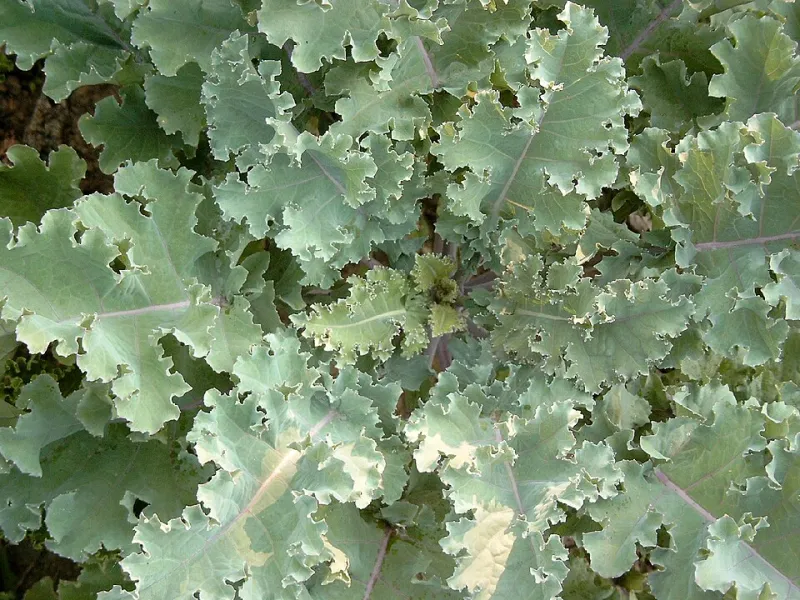
Photo: B. Schroeren, 2003, CC BY-SA 3.0, via Wikimedia Commons
If you grow kale, you already know the arithmetic problem. Four plants will feed you generously from October to March and then present you, in February, with a bunch the size of a small shrub. And most of us do the same thing with it: strip the leaves, cook those, and send the ribs and the big leathery outer leaves to the compost without a second thought.
This is not a guilt piece. Composting is a perfectly respectable end for a vegetable. But the ribs and outer leaves are not scraps — they are just the parts that need a different approach, and once you have sorted them out on the kitchen counter, one bunch stops being one dinner and starts being four or five.
What's actually in a bunch
Hold a whole bunch up and look at it. There are really three ingredients in there. The ribs — thick, pale, crunchy, mild and slightly sweet — behave like a very sturdy chard stem or a piece of celery that has been to the gym. The outer leaves are darker, tougher and more strongly flavoured, and they need longer cooking or a lot of heat. The tender heart, the small pale leaves in the middle, is salad material and should not be anywhere near a long braise.
Sorting them takes two minutes with a knife and a bowl, and it is the single change that makes the rest of this guide work.
Store the parts apart
Wash and dry the bunch, then separate the leaves from the ribs. Ribs go in a lidded box in the salad drawer, or stood upright in a jar with an inch of water in the bottom. Leaves go in a bag with a slightly damp cloth, loosely closed. Kept like this, both will be fine for a week, and usually longer in a cold kitchen.
If you are drowning in it, blanch shredded leaves for ninety seconds, cool them in cold water, squeeze dry and freeze in handfuls. The ribs freeze well too, sliced, straight from raw. Trim the very bottom centimetre of the stems — that part genuinely is woody — and the rest is usable.
The ribs: quick pickle first
If you only adopt one habit from this piece, make it the pickle. Slice the ribs thinly on a sharp bias — no thicker than a two-pound coin — and pack them into a jar. Warm 150ml cider vinegar with 150ml water, a tablespoon of honey, a teaspoon of salt and a few peppercorns until the salt dissolves, pour it over hot, and leave to cool. They are good in twenty minutes and better the next day: crunchy, sharp-sweet, excellent with a cheese sandwich, a baked potato, or alongside roast pork.
Beyond the pickle, ribs want a head start. Sweat them in butter or oil for eight to ten minutes before the leaves go anywhere near the pan, and you get tenderness instead of squeak. Tossed in oil, salt and a little smoked paprika and roasted at 200°C fan for twenty minutes, they make a decent stand-in for chips. And a handful of sliced ribs, an onion, a carrot, a bay leaf and twenty-five minutes of simmering gives you a light, faintly cabbagey stock that is a much better base for winter soup than anything out of a cube.
The outer leaves: give them time or give them heat
These are the leaves people boil for four minutes and then wonder why kale is unpopular.
Braise them. Shredded, in a covered pan with a splash of stock, a knob of butter and a teaspoon of wholegrain mustard, twenty-five minutes over a low heat. Finish with a drizzle of honey and a squeeze of lemon and they come out silky rather than sad. This is the version to serve with sausages and mash.
Traybake them. Chunks of squash or potato, a couple of onions, some sausages, forty minutes at 200°C fan — then stir the shredded outer leaves through for the last ten, with a honey-mustard dressing (a tablespoon of honey, a tablespoon of mustard, two of oil, a splash of vinegar) poured over at the end.
Crisp them. This is the best use of a big outer leaf I know. Shred, toss with a little oil and salt, spread thinly on a tray and bake at 180°C fan for eight to ten minutes until shattery. Crumble over pasta, soup, baked potatoes or a bowl of beans. Make more than you think you need.
The heart, and a pesto for everything else
Keep the pale inner leaves raw — finely shredded with lemon, olive oil, salt and a scrape of honey, or folded through a warm salad at the last moment so they barely wilt.
The rest can become pesto. Blanch any leaves and ribs you have left for a minute, squeeze them dry, then blitz with toasted walnuts or sunflower seeds, a clove of garlic, a good hard cheese, olive oil, salt and a small spoon of honey to round off the bitterness. Freeze it in an ice cube tray and drop a cube into soup, pasta or a tray of roast vegetables through the week.
Matching strong flavours from the cupboard
Kale's robust, slightly bitter flavour has a short list of reliable friends, and most of them are already in your cupboard: honey to soften, mustard to push back, vinegar to lift, fat to carry, salt to focus. Honey with cider vinegar and mustard is the workhorse dressing. Honey with soy and a little chilli is the one for a hot pan and a bowl of rice. Honey with yoghurt and lemon is the one for a warm salad of ribs and roasted carrots.
One bunch, one week
Saturday: traybake with the outer leaves, honey-mustard drizzled at the end. Sunday: ribs simmered into stock while the roast is in. Monday: rib pickle into a jar, ready for sandwiches. Tuesday: pesto from the blanched leftovers, frozen in cubes. Wednesday: crisp toppings over whatever soup is in the fridge.
What finally goes to the compost is the bottom centimetre of stem and anything yellowing. Everything else has had a job. That is not frugality for its own sake — it is just what a good garden vegetable deserves.