Late Nectar, Early Nights: A Pollinator Plan for British November
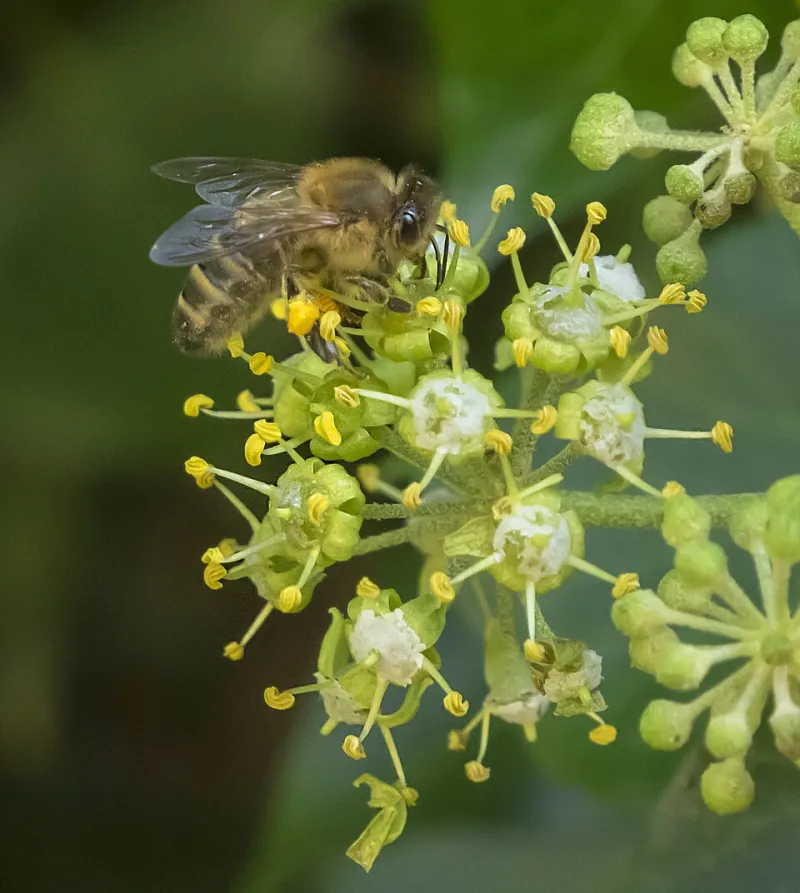
Photo: Jonathan Billinger , CC BY-SA 2.0, via Wikimedia Commons
By early November 2026, most of the allotment has gone quiet. The courgettes are finished, the runner beans are brown, and the last of the cosmos is looking more ragged than romantic. But a sunny lunchtime can still bring out a buff-tailed bumblebee or a lone honeybee, and a little late forage can make a difference. The trick is to give them something worth visiting without making the garden look like a trap.
Why late flowers matter
UK pollinators do not all vanish at the first frost. Honeybees will forage on mild days if there is something open, and some bumblebee queens and workers can still be active well into autumn. This is not about rescuing a colony or keeping bees artificially busy. It is about small top-ups: a few late flowers, a sheltered corner, and a sensible approach to tidying up.
The other half of the job is restraint. A plant left to flower for a fortnight longer may look scruffy, but it can be a genuine pit stop. A garden that is stripped clean in October is tidy for us and empty for them.
Twelve plants that can still earn their place
These are not guarantees for every UK garden. A mild November in Devon is not the same as a sharp one in Aberdeenshire. But if you have any of these, or you are planning next year's planting, they are worth knowing.
-
Ivy (Hedera helix). Often the most valuable late nectar source in a British garden. Leave flowering ivy alone until the flowers have gone over, especially on a sunny wall.
-
Strawberry tree (Arbutus unedo). An evergreen with bell-shaped flowers and fruit at the same time. It can be a quiet late-season lifeline in milder areas.
-
Mahonia x media. Those spiky yellow winter flowers are not just for structure. They can offer pollen and nectar on mild days.
-
Winter honeysuckle (Lonicera fragrantissima). Fragrant, unfussy and useful. A sheltered spot helps it earn its keep.
-
Viburnum x bodnantense. The pink flowers often start before the year is out. Best in a spot that catches winter sun.
-
Michaelmas daisies (Symphyotrichum). Late asters can still be working in early November if the weather has been kind. Leave the faded heads for seed too.
-
Sedum (Hylotelephium). The flat flower heads are a classic late-summer and autumn bee plant. Even when they brown, the seed heads have structure and wildlife value.
-
Cosmos. Usually done by now, but in a mild year and a sheltered garden, the last flowers can still be visited. Do not deadhead the very last ones in a panic.
-
Calendula. A tough little pot marigold that can keep going in a mild autumn. It is not a native, but it is a useful bridge when little else is open.
-
Salvia. Some late-flowering salvias hold on well into autumn. A sunny, free-draining spot makes a difference.
-
White dead-nettle (Lamium album). A common wild plant that can flower in mild winters. If it is already in a wild corner, leave a patch.
-
Penstemon. In a sheltered garden, penstemons can flower until the first proper frost. They are not a winter plant, but they can be a late pit stop.
If you only have room for one thing, think about ivy or a winter-flowering shrub. Both do more for late pollinators than a last-minute packet of seed ever will.
Leave a little wild — but not too wild
The best November gardening advice is often to do less. Leave the seed heads on teasels and sunflowers. Leave hollow stems standing for overwintering insects. Leave a few fallen leaves in a quiet corner. Do not cut the ivy just because it looks untidy from the kitchen window.
That said, this is not an excuse to abandon everything. If a plant is diseased, smothering something else, or blocking a path, deal with it. The aim is a little rough around the edges, not a neglect competition.
Cold mornings and warm afternoons
One of the kindest things you can do for pollinators in November is avoid tempting them out when they cannot cope. A flower in deep shade can stay cold all day, so a bee that lands there may chill quickly. Put late nectar plants in a sheltered, sunny spot if you can.
Avoid opening a greenhouse or lifting a cloche on a cold morning just to have a look. Wait for a mild afternoon. Avoid spraying anything, even a so-called gentle product, on a day when bees are about. And if you are moving pots or compost, check first — a sleepy queen may be tucked inside.
A shallow dish of water with a few stones in it is still useful, but keep it clean and do not let it become a drowning trap. Small, simple things add up.
A simple leave-a-little-wild checklist
- Leave flowering ivy uncut until it has finished.
- Keep a few seed heads and hollow stems standing.
- Let one corner stay a bit scruffy over winter.
- Put late flowers in a sunny, sheltered spot.
- Avoid spraying on mild days when bees are flying.
- Check pots, compost and sheltered corners before moving them.
- Keep a shallow, stone-filled water dish topped up.
- Plant one winter-flowering shrub or a patch of ivy for next year.
November is not a dead month in the garden. It is a slower one. With a little restraint, a British plot can still offer a late meal — and a decent place to shelter until spring.