Four Pots and a Frost Forecast: Growing Kale on a Balcony Through a British Winter
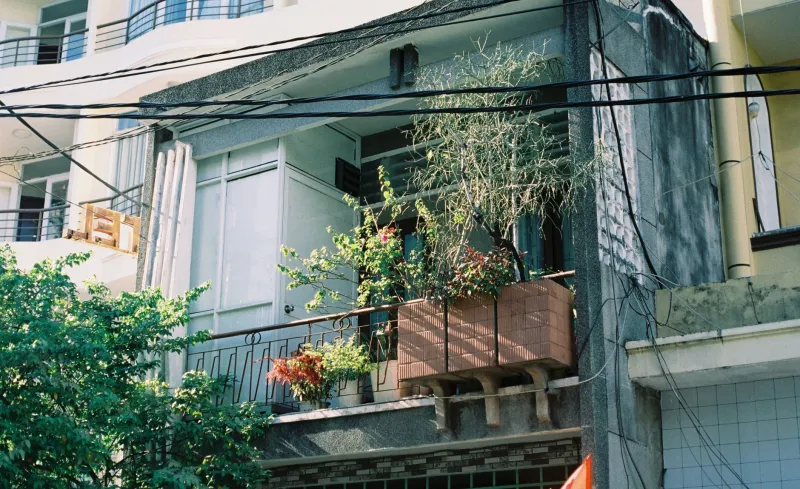
There is a certain kind of satisfaction in standing at a sliding door in November, mug in hand, looking at four pots that are quietly doing a job. Not a glossy kitchen garden. Not a raised bed empire. Just four pots and enough kale to make a difference to a Wednesday night.
Balcony growing gets talked about as a compromise. I'd rather think of it as a scale. You are not trying to feed a family from three square metres of concrete — you are trying to keep a steady trickle of something green and living coming into the kitchen. Kale is unusually good at that job.
Why kale takes to a pot so kindly
Most winter greens sulk in containers. Kale mostly shrugs and gets on with it. It is a brassica, so it is sturdy, it tolerates a cut-and-come-again approach, and it will accept less than full sun — six hours is lovely, four is workable, and a slightly shaded balcony will still give you pickable leaves rather than show specimens.
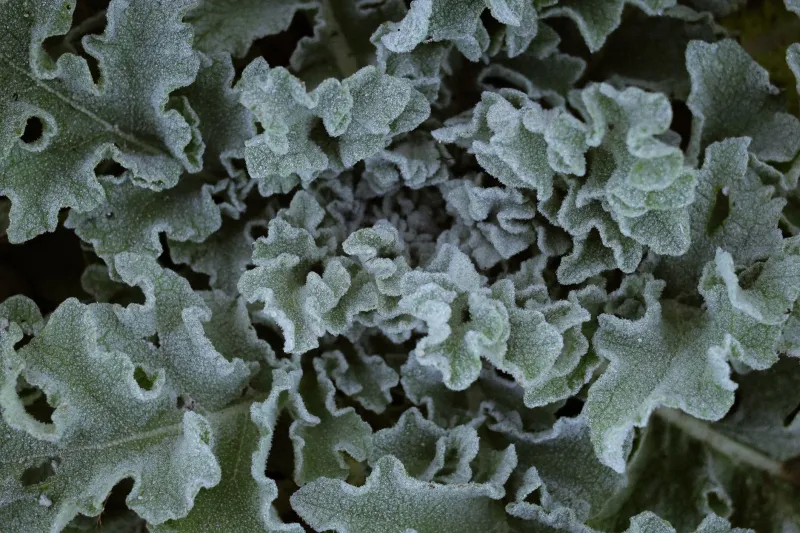
It also improves with cold. A few sharp nights turn the leaves sweeter and more tender, which is why a December picking often tastes better than an October one. You are not fighting the British winter here so much as using it.
Pick a variety that won't elbow you out
This is where small-space growing is won or lost. Big, vigorous kales will fill a pot and then lean over the railing like a nosy neighbour.
- 'Dwarf Green Curled' — the sensible one. Compact, frilly, generous, and widely available.
- 'Nero di Toscana' (cavolo nero) — tall and narrow rather than wide, which suits pots surprisingly well. Use a heavier pot, because a metre of stem in a gale is a lever.
- 'Redbor' — purple, architectural, and perfectly edible. Good if you want the balcony to look like something.
- 'Pentland Brig' — an older British variety, hardy and reliable, worth seeking out from smaller seed sellers.
One plant per 5–10 litre pot is the honest rule. Two in a big trough is fine if you are picking hard and often; three is optimistic.
The pot matters more than the plant label
Minimum 20–25cm of depth, drainage holes you can actually see, and a pot you can lift when it is soaked through. Balconies have weight limits, and wet compost is heavy — cluster pots near the wall rather than out at the edge, and think twice before buying the enormous glazed planter that looks so good in the catalogue.
Stand everything on pot feet or two stacked bricks. In summer this stops waterlogging; in winter it stops the pot sitting in a puddle for a fortnight, which is what actually kills balcony kale.
Compost, feeding and not overdoing it
A peat-free multipurpose compost with a good handful of horticultural grit stirred through suits kale well. Add a slow-release general fertiliser at planting and you have sorted most of its needs.
Come February, when light returns and the plants start moving again, a fortnightly dilute seaweed or comfrey feed will push out fresh growth. Resist feeding hard through December and January. You will encourage soft leaves at the exact moment soft leaves are a liability.
Watering: the opposite problem to the one you expect
Every balcony guide warns about drought. From November to March, your enemy is the reverse. Compost that stays soaked for weeks goes sour, roots rot, and the plant goes yellow and sulky before quietly dying.
Check before you water — push a finger in, or lift the pot and judge by weight. Water in the morning if you water at all, and empty any saucer afterwards rather than leaving the pot standing in it. Rainwater from a butt is ideal; tap water is completely fine.
Cold wind is the other hidden dryness. A plant battered by wind loses moisture through its leaves even in a wet month. A bit of shelter — a wall, a trellis, a neighbouring pot — does more than any amount of extra watering.
Slugs, pigeons and other quiet thieves
In a mild, damp spell slugs will find a balcony, usually via a route you did not know existed. Copper tape, evening patrols with a torch, and keeping the area under the pots clear will see most of them off.
Pigeons are the winter problem. Netting on a simple frame is the reliable answer; fleece works too and doubles as weather protection. Cabbage white butterflies are mostly done for the year by now, so the summer pinprick problem can wait until spring.
To fleece or not to fleece
Kale will take a fair bit of cold — most varieties laugh at a normal British frost. Fleece earns its place on an exposed balcony or in a hard snap, and it helps with wind rock as much as temperature. But don't wrap it up all winter. A plant that is a little weathered is a plant that is acclimatised.
When to pick, and how much to expect
Sown in late summer or planted as plugs in early autumn, kale is generally pickable within eight to twelve weeks. Start taking the lowest outer leaves once the plant has four or five good ones, always leaving the growing tip alone.
A realistic balcony yield is a leaf or two per plant per week, not a carrier bag. From four pots that is roughly a generous panful for two people every seven to ten days — enough for a bowl of soup, a stir-fry, or a pile wilted down with garlic and a squeeze of lemon. Strip a plant bare and you will wait a month for the favour to be returned.
If you are reading this in November
Be realistic: sowing now is a gamble that only pays off in mild spots. Buying a few sturdy plugs is a far better use of a tenner, and they will settle in before the worst of the weather. February sowings under cover on a windowsill are the calmer route — and by then you will know exactly which corner of the balcony gets the light.
Either way, the aim is modest and that is the point. Four pots, a bit of attention, and a small, steady supply of something you grew yourself. It will not replace the greengrocer. It will make a Tuesday better.