The Quiet Hive: What British Bees Actually Do Between December and February
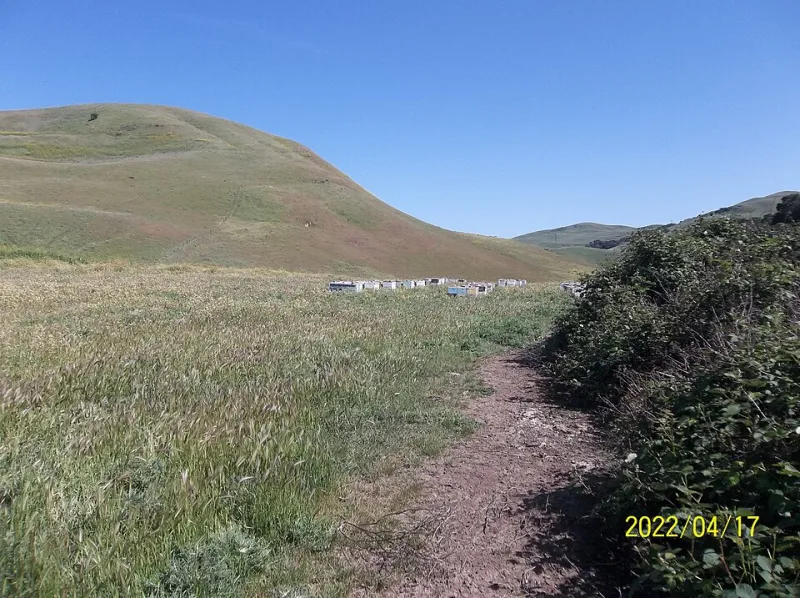
Photo: Lhimec, CC0, via Wikimedia Commons
In July a hive is one of the noisiest things in the garden. In January it looks like a wooden box and, unless you put your ear against it on a mild afternoon, it sounds like nothing at all. It would be easy to assume the bees are asleep.
They are not. A winter colony is running one of the more remarkable pieces of engineering in the natural world, and understanding it makes the honey in your kitchen feel like a different substance entirely.
No, they don't hibernate
Solitary bees overwinter as larvae, pupae or adults in soil and hollow stems, dormant and still. Honeybees do not. They stay awake, in a tight group, generating heat by shivering their flight muscles, and they do it for four or five months on stored food.
The cluster is roughly the shape of a rugby ball and it moves. Bees on the outside shuffle inward, bees on the inside work their way out, and the whole mass drifts slowly across the frames, following the stores. The queen is somewhere in the middle, kept at around 34–35°C even when the outside air is below freezing. On very cold nights the cluster tightens and the outer bees get chilled near to dormancy — but they don't die, as long as the colony has enough honey and enough bees.
The larder question
Here's where the jar in your cupboard becomes meaningful. A colony needs something in the region of 15–20kg of stores to get through a British winter, and in a bad year, more. Beekeepers remove only the surplus — the honey the colony can spare after its own needs are met. Anybody harvesting everything in September and hoping for the best in February is not really keeping bees; they're gambling.
That is the honest answer to the question every new beekeeper asks: how much can I take? Less than you think, and only after the autumn has gone well.
Cleansing flights and the mild day
Bees won't defecate inside the hive if they can help it. In a long cold spell they hold on, which is one reason they need a mild day now and then. On a still, bright afternoon when the temperature creeps above about 8–10°C, the entrance suddenly comes alive and a scatter of bees shoots out, does a quick loop and returns.
Those are cleansing flights, and they are the main sign of life in a winter hive. If you see a few bees on the ground in the sunshine in January, nearest guess is they've landed and gone cold. Leave them; they'll often go when the sun moves off them.
Why the lid stays on
Beekeepers do open hives at other times of year. In winter, mostly not. Breaking the propolis seal lets cold air in, disturbs the cluster and releases warm, moist air that then condenses on the inside of the roof.
Damp kills more colonies than cold does. A hive with good ventilation and a modest amount of insulation above the crownboard is far healthier than one that's been sealed tight and fussed over. Most winter checks can be done from outside: lift one side of the brood box to gauge weight — if it feels alarmingly light by late January, that's when a block of fondant goes on, above the cluster, as insurance rather than a routine.
The winter bee, and the January turn
Bees raised in late autumn are different. They're fatter, they live four to six months instead of a few weeks, and they're built for exactly this. Their job is to survive until there's forage again.
Around the winter solstice, as daylight lengthens by minutes, the queen starts laying again — a tiny patch of brood in the middle of the cluster, expanding through January. Brood needs to be kept at 35°C, which burns stores fast. This is the hungriest fortnight of the year and the one that catches people out: the colony gets through more in a mild February than in a hard December.
What gardeners can do — and what to leave alone
You cannot feed a wild honeybee colony by planting one thing, but you can make a garden less of a desert between December and February.
- Leave the stems. Hollow stems, seed heads and general untidiness give overwintering solitary bees and other insects somewhere to be.
- Don't cut the ivy until late. Ivy flowering into November is one of the last big forage crops of the year, and the berries help birds later.
- Think early, not just late: willow, hazel, snowdrop, hellebore and crocus give a colony its first real nectar after the winter.
- Put the strimmer down near nesting sites. Bare, compacted ground and mounds of earth are habitat.
- Skip the pesticides, and not just the obvious ones. Garden chemicals rarely stay in the garden.
What to leave alone: the hive. Don't tap it, don't open the lid to have a look, don't leave out honey or sugar water as a kindness to stragglers. Unpasteurised honey can carry disease into a colony and sugar water in the cold months encourages flying when the bees should be sitting still. If a beekeeper has hives nearby, the bees are being looked after.
The jar on the shelf
Come June, the same colony will be three or four times the size and filling supers faster than you can keep up. The honey you spoon into a dressing in November was made last spring and summer and stored so that the bees you can't see in January would have something to live on.
They took what they needed. You got the rest. That's the whole arrangement, and it's worth remembering when the garden looks bare.