Kale Doesn't Need a Halo: Cooking It Like the British Brassica It Is

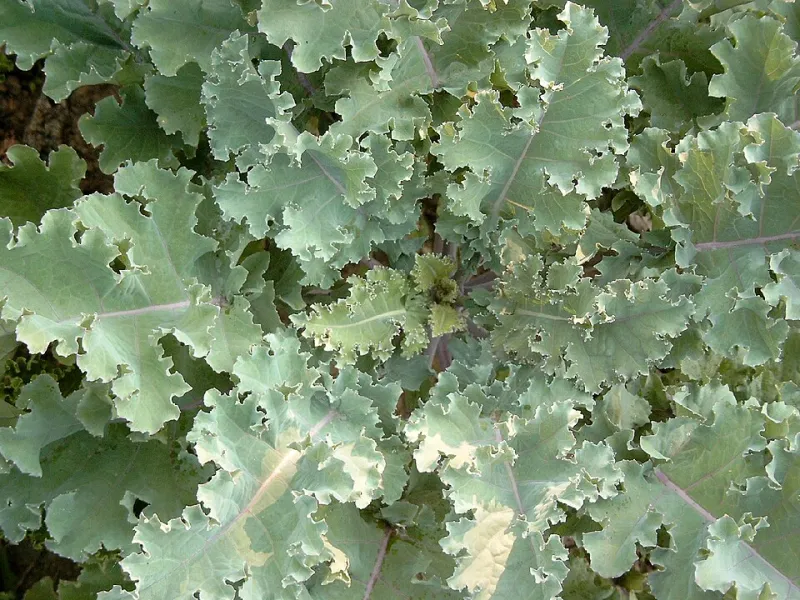
Photo: Missvain, CC0, via Wikimedia Commons
Kale has had a peculiar fifteen years. One minute it was the tired outer leaf of the brassica family, the thing your nan boiled to a khaki pulp; the next it was in a smoothie, on a T-shirt and in a £7 salad box with a paragraph of copy about antioxidants. Somewhere in that rebrand, the actual vegetable got lost.
This is not an attack on kale. It is more or less the opposite. I grow it, I buy it, I eat it most weeks between November and March. What I object to is the halo — the superfood language that turns an honest winter vegetable into homework.
A halo is a job description
The moment a food is called a superfood, it stops being dinner and becomes a task. You are no longer eating kale because it is good with butter and a baked potato; you are eating it because it is supposedly doing something to your insides, and you had better not ruin the effect with, say, a tablespoon of something delicious.
That is a miserable way to cook, and it produces miserable cooking: kale blended into sweet green sludge, kale steamed to nothing and eaten with a frown, kale treated as medicine with a side of self-congratulation. No wonder so many people quietly hate the stuff. Any vegetable that arrives with a duty attached is going to struggle at the table.
There is an odd geography to the halo as well. A head of kale flown in, wrapped in plastic and sold under a slogan about wellness is not obviously more virtuous than the January cabbage sitting next to it in the shop, grown forty miles away and priced at 80p.
It has been here all along
Kale is not an import. It is a British brassica with a long, unglamorous CV. In Scotland, kail was so ordinary that the word named the garden itself — the kailyard — and a bowl of it was everyday winter food long before anybody thought to put it in a blender. Cottage gardens grew it because it stood through frost when other things gave up, and because a plant that keeps producing leaves from October to March is worth its space.
Frost, in fact, improves it. A cold snap knocks back some of the harshness in the leaves, which is why kale pulled from an allotment in December tastes sweeter than the same variety in September. That is not a wellness claim; it is just how the plant works.
Bitterness is a flavour, not a fault
Here is the thing the marketing never says: kale is bitter, and that is fine. Bitter is one of the tastes we are built to enjoy in the right company — coffee, dark chocolate, a proper pint, a plate of purple sprouting broccoli. The trick is balance, not disguise.
Bitter leaves want fat, salt, acid and a little sweetness. Butter. Olive oil. A grating of hard cheese. A squeeze of lemon. A spoon of mustard. And yes, sometimes honey — not poured over like a dessert dressing, but used as a seasoning, a teaspoon at a time, doing the same job a pinch of sugar does in a tomato sauce.
Four ways to cook it that don't involve a blender
Wilt it fast. Strip the leaves, tear or ribbon them, and put them in a wide pan over a decent heat with butter or olive oil and a good pinch of salt. Stir for a minute, add a splash of water, clamp on a lid for two minutes more. Done. Dress with lemon and a thread of honey if the leaves are particularly punchy.
Roast it hard. Dry the leaves properly, toss with oil and salt, spread them out with room to breathe, and roast at 200°C fan for eight to ten minutes. The edges go crisp and the middle stays tender. This is the version that converts people.
Braise it slow. Thick ribs and big outer leaves in a covered pan with a little stock, a knob of butter and a teaspoon of mustard, twenty-five minutes. Winter food, plain and good.
Eat it raw, but be kind to it. Shred finely, salt for ten minutes, squeeze out the water, then dress with lemon, olive oil and a little honey. It softens without turning to mush.
Where the honey fits
Honey and kale are not a gimmick pairing. Bitterness and sweetness are natural allies, and a British honey — a light spring flower or something darker and more robust like heather — can round off a dressing or a glaze without making the plate taste like pudding. Honey-mustard is the obvious route: roughly equal parts honey and mustard, a splash of cider vinegar, whisked into warm oil and spooned over roasted kale and shallots. It takes ten minutes and will do more for your opinion of kale than any slogan.
Keep the honey in its place, though. A teaspoon in a dressing is balance; three tablespoons is a different dish entirely, and not one that needs kale in it.
Stop being precious with it
Store a bunch loosely in the fridge, in a bag or stood in a jug of water like flowers, and use it within a week. Cook it with sausages, with roast potatoes, under a fried egg, alongside a lump of cheddar, or stirred into a soup with a bit of bacon. Serve it with something plain and let it be a vegetable, not a statement.
The kindest thing we can do for kale is stop calling it anything special. It is a tough, generous, frost-proof brassica that has fed British kitchens for centuries without a single antioxidant claim to its name. That is plenty.