Garlic Under Honey: A Small November Experiment Worth Leaving Alone
November has a particular kind of kitchen energy. The garden is mostly done, the light is gone by mid-afternoon, and suddenly a jar on the shelf feels like a reasonable thing to fuss over. Honey-fermented garlic fits that mood neatly. It is not fast, it is not dramatic, and it will not solve winter. But it is a genuinely nice thing to make if you like the idea of a condiment that improves simply because you left it alone.
The internet has a habit of making honey garlic sound like a cure-all. It is not. At Kale & Bee we are more interested in the ordinary kitchen version: a small jar, a British honey with some character, and a bit of patience. Think of it as an experiment in waiting rather than a bottle of medicine.
What is actually happening in the jar
You pack peeled garlic cloves into a clean jar, cover them with honey, and wait. Over the first few days the honey draws moisture out of the garlic. It becomes thinner and more pourable, and the garlic starts to lose its raw, hot edge. After a few weeks the cloves are milder and slightly chewy, and the honey tastes savoury, sweet and distinctly garlicky. This is often called honey-fermented garlic, though the word fermented does a lot of heavy lifting. It is a slow infusion with some microbial activity, not a brewery project. You do not need a thermometer, an airlock or a lecture in food science. You do need to be clean, keep the cloves under the honey, and pay attention.
Why British honey suits the job
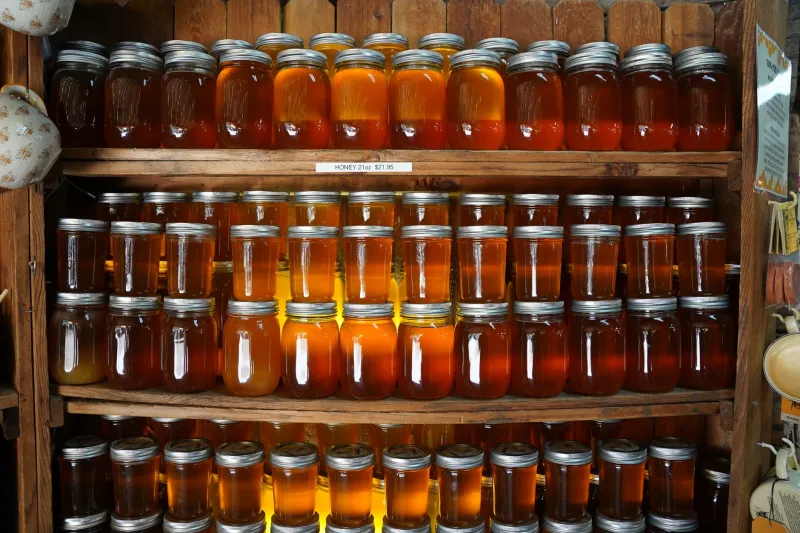
A runny British honey is the easiest place to start. Something with a little flavour of its own is nice here: a lighter spring honey will let the garlic come through, while a darker late-summer honey gives the whole jar a rounder, more savoury tone. Set honey is not a problem — warm the jar gently in a bowl of warm water until it loosens, but do not boil it or shove it in the microwave until it is hot. You are making a kitchen condiment, not a laboratory sample. Local honey is a lovely bonus, but the important thing is that it is honey you enjoy eating with a spoon.
A small, sensible batch
This is not a recipe for a giant jar that sits at the back of the cupboard until next autumn. Make a small batch you can use within a few months.
You will need a clean 500ml jar with a lid, about 200g of firm garlic cloves, and roughly 250–300g of runny British honey — enough to cover the garlic with a little room to spare. A larger jar is fine, but small is easier to manage.
Sterilise the jar and lid in the usual way, then dry them properly. Peel the garlic and remove any bruised or soft cloves. Keep the cloves whole; there is no need to chop them. Pack them into the jar, leaving a couple of centimetres of headspace, and pour over the honey. Use a clean spoon or a small food-safe weight to push the cloves down so they are under the honey. Do not top up with fresh garlic later. If you want a bigger batch, make a bigger batch from the start.
Put the lid on and keep the jar at room temperature, out of direct sunlight, for the first few weeks. For the first fortnight, open the lid once a day to release any pressure — a quick burp is enough — and push the cloves back under the honey with a clean spoon. Turn the jar upside down and back again every day or two so the cloves stay coated. After four to six weeks, the honey should be thinner and the garlic noticeably milder. Move the jar to the fridge and use it from there.
Treat it as a fridge condiment, not a shelf-stable preserve. I would use a small batch within about three months. If you want to keep the cloves longer, freeze them in their honey in small portions and use them from frozen.
The patience part
The first week can be oddly disappointing. The honey may look cloudy, the garlic may float, and nothing much seems to happen. Then you notice the honey is thinner, the smell has softened, and the cloves have gone from sharp to something more rounded. That is the whole pleasure of the project. It is a jar that rewards a quick glance on a grey morning. Label it with the date you started, keep a note on your phone if you like, and try not to open it every five minutes. The garlic does not need your supervision. It needs time.
Food safety, without the hand-waving
This is the part worth reading twice. Home-fermented garlic in honey is not risk-free. Garlic is a low-acid food, and honey can contain spores of Clostridium botulinum. A jar of garlic under honey is a low-oxygen environment, and public health advice is rightly cautious about these kinds of mixtures. Most people make and eat honey garlic without trouble, but that does not mean you should ignore the basics.
Honey should not be given to babies under 12 months old, in any form. That includes the honey from this jar and any dressing made with it. If you are pregnant, immunocompromised, or cooking for someone who is, check with a health professional before making or eating home-fermented garlic in honey. This is not a remedy, and it is not a substitute for medical advice. Do not use it as a cold cure or give it to anyone as a treatment.
Keep everything clean. Use a sterilised jar, clean utensils and dry garlic cloves. Keep the cloves fully submerged. Burp the jar daily at the start. Store it in the fridge once it has had its initial room-temperature spell. If you see mould, smell something yeasty or plainly off, or the cloves look slimy, throw the batch away. Do not skim it and carry on. If you are unsure at any point, bin it. A small jar of honey and garlic is not worth a stomach upset.
How to use the jar
The honey is the easy part. Whisk a spoonful into a mustard dressing for kale or roast carrots, with olive oil, a little vinegar and salt. Stir it into a squash or parsnip soup at the end of cooking. Toss wedges of celeriac or beetroot with the honey and a few chopped cloves before roasting. The cloves themselves are lovely sliced into a warm potato salad, mashed into butter, or tucked into a roast chicken tray with lemon and thyme.
One useful habit: use the honey where you would use ordinary honey, then taste before adding more. It is more savoury than sweet, and a little goes a long way in a dressing. The cloves are mild enough to eat whole, but they still taste of garlic. That is rather the point.
A jar for the shelf, not the medicine cabinet
Honey-fermented garlic is a good November project because it asks for almost nothing: a clean jar, a modest amount of British honey, and the willingness to leave something alone. It will not fix your winter, and it should not be sold as a cure. But a small jar on the shelf, slowly turning savoury and mellow, is a quietly satisfying thing to have in the kitchen. Make a little, label it, keep it cold, and use it with the sort of food this site likes best: roots, greens, soups and roast things. Patience, as ever, does most of the work.