The Half-Swap Rule: Baking Cakes, Flapjacks and Loaf Bakes With British Honey

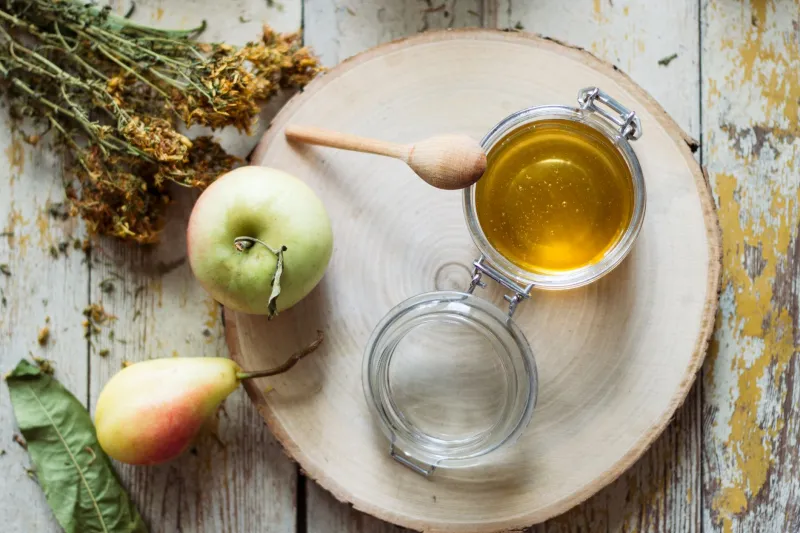
Photo: British honey jar with cake loaf and flapjacks on a wooden kitchen table, via cdn.britannica.com
November is a good month to have a jar of honey within reach of the mixing bowl. The garden is winding down, the kitchen is warming up, and a flapjack or a small loaf cake feels like a reasonable response to a grey afternoon. But honey is not a straight swap for caster sugar, and that is where a lot of well-meaning bakes go a little sideways — dense in the middle, too dark at the edges, or oddly damp under the crust.
The good news is that you do not need a new set of rules for every recipe. A few calm principles will get you most of the way there, whether you are making a honey loaf, a tray of oat bars or a simple sponge for the weekend. Think of it as a half-swap approach: keep some sugar for structure, let honey bring flavour and softness, and adjust the liquid and heat with a light hand.
Start with a half-swap, not a full takeover
Honey is sweeter than sugar by volume and it carries water with it. If you replace every grain of sugar in a familiar recipe, you are changing the chemistry as well as the flavour. For most everyday bakes, a half-swap is the safer move. Replace roughly half the sugar with honey and leave the rest as sugar. You will still taste the honey, especially in a simple loaf or a tray of flapjacks, but the bake will keep more of its original structure.
As a rough guide, use about 75–80g of honey for every 100g of sugar you are replacing. Honey is also around 17–20% water, so for every 100g of sugar swapped out, reduce other liquid in the recipe by about 15–20ml. If there is no liquid to take out — flapjacks are the obvious example — add a spoonful of oats or flour, or simply expect a softer set. Neither is a disaster. It is just information.
What honey does to a batter
Honey is hygroscopic, which is a fancy way of saying it likes to hold on to moisture. That is why a honey loaf often stays tender for a day or two longer than a plain sugar loaf. It can also make a batter feel looser than expected, so give yourself time to notice the consistency before you panic and add flour. A little slackness is normal.
Honey also browns faster than sugar. That is lovely on a gingerbread or a dark treacle loaf, where you want depth and colour. It is less lovely on a delicate sponge, where the edges can catch before the middle is set. Drop the fan oven temperature by around 10°C, or the conventional setting by 15°C, and check the bake five minutes earlier than the recipe suggests. If the top is colouring too quickly, a loose sheet of foil is kinder than opening the door repeatedly.
One more thing: honey is mildly acidic. In recipes that rely on bicarbonate of soda, a large honey swap can affect the rise and colour. If you are making a big change, start with a recipe written for honey rather than improvising too heavily. Small swaps in a loaf cake or flapjack are much more forgiving.
Which British honey for which bake
British honey is not one flavour. A jar from a Yorkshire hedgerow will not taste like a jar from a London allotment, and that is part of the pleasure. Taste before you bake.
Set rapeseed honey is mild, creamy and firm. It is excellent in flapjacks and oat bars, where you want a soft set and a gentle sweetness that will not shout over the oats. It also works well in a simple shortbread or a plain honey cake.
Heather honey is stronger, darker and more aromatic. Use it in gingerbread, parkin or a dark loaf where its intensity has somewhere to go. It would overwhelm a delicate Victoria sponge, so save it for bakes with spice, treacle or wholemeal flour.
A soft-set mixed blossom honey is the all-rounder. Keep a jar for loaf cakes, madeira-style bakes and simple sponges. If you only have one honey in the cupboard, this is the one that will behave most politely across the week.
Three bakes to try first
Honey flapjacks are the easiest place to start. Replace half the golden syrup with a mild set honey, keep the butter and oats the same, and add a pinch of salt. Press the mixture firmly into the tin, bake at a slightly lower temperature and let it cool completely before cutting. They will be a little softer than a classic flapjack, which is no bad thing.
A lemon or plain honey loaf is the next step. Take a reliable loaf cake recipe, swap half the sugar for soft-set blossom honey, and reduce the milk by a tablespoon or two. Bake it a shade cooler and check early. The crumb will be moist and the crust a little darker — both signs that the honey is doing its job.
For a November weekend, try a honey gingerbread or parkin with heather honey. Use it alongside black treacle or dark muscovado rather than instead of them. The honey brings perfume and softness; the sugar and treacle bring the structure and the deep, sticky crumb.
When to leave the recipe alone
Some bakes rely on sugar for structure, not just sweetness. Meringues, macarons, fudge and jam are not the place for casual honey swaps. Delicate whisked sponges can also be fussy. If a recipe is already working well, you do not have to improve it. Baking with honey is not a test of virtue.
The point is to let the jar earn its place. A spoonful in a flapjack, a half-swap in a loaf, a darker honey in a gingerbread — these are small, useful changes. They keep the kitchen warm, use up the honey you have, and leave you with something honest to eat with a cup of tea. No perfection required.