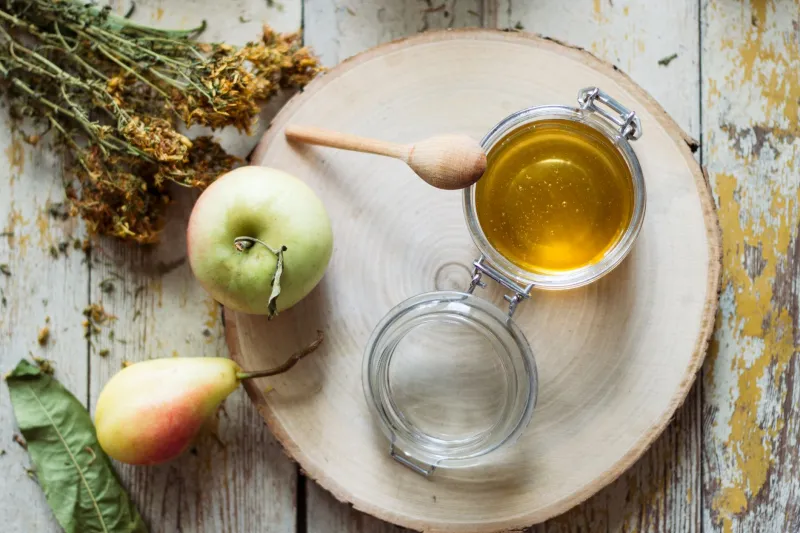
The Honest Spoon: What a Jar of British Honey Can — and Can't — Do for a Winter Cold
Photo: 14GTR, CC0, via Wikimedia Commons
There is a particular kind of November evening when the kettle seems to run itself. Someone in the house has started clearing their throat a little too often, the lemon has been promoted from garnish to essential, and a jar of British honey sits on the counter looking quietly useful. Honey has a long reputation as a winter soother, and much of it is deserved. But it is also one of those ingredients that attracts a lot of overblown claims — a spoonful of wellness, a natural remedy, a cure in amber. It is none of those things. It is, however, a genuinely nice thing to have in the cupboard when a cold lands.
What honey is actually good for
Let us start with the sensible bit. Honey can help soothe a cough. In the UK, NHS advice acknowledges that honey can be used for coughs in adults and children over one year old, and it is often suggested as a first step for a short-term cough. That is a real, useful thing. A spoonful can coat a raw throat, take the edge off a tickle, and make a mug of something warm feel more comforting. It is not an antibiotic, it will not shorten a cold, and it will not stop a virus in its tracks. It soothes; it does not cure. That distinction matters, because it keeps us from expecting too much of a good jar.
A spoon, a mug and a little patience
The best way to use honey in cold season is also the least complicated. Warm water, a squeeze of lemon, and a teaspoon or two of honey is a classic for a reason. Let the water cool slightly before adding the honey — not because the honey will become useless in hot water, but because boiling water flattens the aroma and makes the whole thing taste less lovely. A thyme infusion with honey is another gentle option: steep a few sprigs of fresh thyme in just-boiled water for five minutes, strain, and stir in honey once it has cooled a little. It is comforting without being medicinal in tone.
For a sore throat, a straight teaspoon of honey can be enough. Take it slowly. There is no need to glug it from the jar, and there is no benefit in having more than you enjoy. A small spoonful, repeated as needed, is the sensible approach. And if you are making a hot drink, keep it simple: honey, lemon, maybe ginger. You do not need a supplement aisle in a mug.
The age rule that is not negotiable
Honey should not be given to babies under 12 months old. This is not a cautious maybe; it is standard NHS advice. Honey can contain spores of Clostridium botulinum, which can cause infant botulism in very young babies. Their digestive systems are not mature enough to handle it. After the first birthday, the risk is considered negligible. If you are making a honey lemon drink for a toddler, they are past that threshold — but for a baby, keep the honey out of it entirely. This is the one hard line in an otherwise gentle article, and it is worth repeating to anyone who looks after a little one.
When to put the spoon down and pick up the phone
Honey is a comfort, not a triage tool. If a cough is hanging around for more than three weeks, or if you are breathless, wheezing, producing blood, running a high fever, feeling confused, or getting worse rather than better, speak to a GP. If you are unsure, NHS 111 is there for advice. A pharmacist is also a genuinely good first stop for coughs and colds — they can advise on over-the-counter options, check interactions with other medicines, and tell you whether something needs a second look. None of that is a failure of the honey. It is just knowing what the honey is for.
Children, older adults, pregnant people and anyone with a long-term health condition should be a bit quicker to seek advice. And if a cough is accompanied by chest pain or difficulty breathing, do not wait for a spoonful to fix it. Honey can sit alongside proper care; it cannot replace it.
Provenance matters, but not as a miracle
British honey is worth buying because it tastes good, supports local beekeepers, and often has a character you will not find in a generic blend. A jar from a farmers' market or a nearby apiary can be a lovely thing — floral, woody, slightly different from the last one. But provenance is not a health claim. A single-origin British honey is not more medicinal than a supermarket jar, and a raw or unfiltered honey is not a cure. It is simply honey, with its own flavour and story. Buy the one you like, from a seller you trust, and ignore any label that promises to boost immunity or fight infection. Honey is food, not medicine.
Moderation still counts, too. Honey is sugar. It is a less refined sugar than some, and it brings flavour, but it is still something to enjoy rather than rely on. A teaspoon or two in a drink is fine. A jar a day is not a wellness plan.
A small winter shelf
If you want a cold-season shelf that feels useful without tipping into hype, keep it short: a good British honey, a lemon or two, some fresh thyme, and a mug you like. That is enough. The honey will soothe, the lemon will lift, and the ritual will do what rituals do. The rest — the resting, the fluids, the pharmacist if needed — is the unglamorous part that actually helps.
So enjoy the spoon. Just keep it honest. Honey is a lovely comfort in cold season, and that is plenty. It does not need to be more than that.