Cold Plate, Warm Dressing: A Winter Kale Salad That Earns Its Place
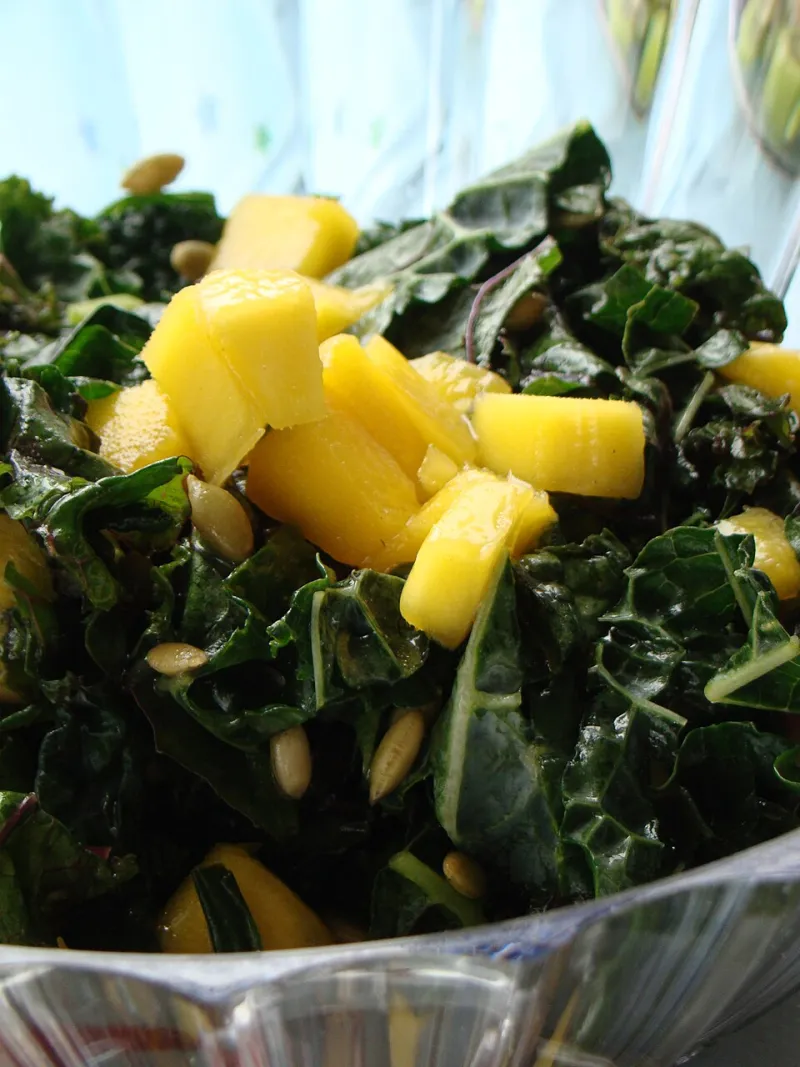
Photo: Vegan Feast Catering, CC BY 2.0, via Wikimedia Commons
There is a particular kind of winter salad that gives salads a bad name: fridge-cold leaves, a pale tomato, a dressing that tastes of nothing much. This is not that. Kale in December is at its best — thick, dark, faintly sweet after a frost — and it responds to a bit of handling in a way that soft summer leaves never could.
The trick is not more ingredients. It is three small bits of technique: a short massage to soften the leaves without turning them to mulch, a warm honey-mustard dressing that half-wilts them on contact, and a crunchy topping that stays crunchy because you keep it in a separate jar until the last moment. Get those right and a cold plate becomes something you actually look forward to at 12:40 on a Tuesday.
Start with leaves that can take it
Curly kale is the supermarket default and it works fine, but the best winter salads come from the sturdier sorts: cavolo nero, January King, Red Russian if you grow it, or the thick-leaved kale that comes in a bunch rather than a bag. Bagged pre-shredded kale is convenient and I use it, but it bruises fast and goes limp in the fridge within a couple of days.
Strip the leaves from the thick central ribs and tear them into pieces roughly the size of a postage stamp. Don't throw the ribs away — slice them thinly and fry them in a little oil until they go dark and crisp, or drop them into a stock bag in the freezer. Nothing in the compost, as we've said before.
The massage is two minutes, not ten
Put the torn leaves in a big bowl, add a good pinch of flaked salt and a squeeze of lemon, and scrunch with clean hands for about two minutes. You are looking for the leaves to darken, shrink a little and feel silkier — not to crush them into a paste. If you've overshot, don't panic; dress it and eat it anyway, but note that over-massaged kale goes slightly slimy by the next day.
If you'd rather not stand there scrunching, an alternative is to toss the leaves in the dressing and leave them for twenty minutes while you get on with something else. Same result, less effort, slightly less satisfying.
The dressing wants to be warm
This is the part that changes everything. Warm the dressing gently — in a small pan or a jug in the microwave for fifteen seconds — so it pours over the leaves hot but not boiling.
- 2 teaspoons runny British honey
- 1 teaspoon Dijon mustard
- 1½ tablespoons cider vinegar
- 4 tablespoons cold-pressed rapeseed oil
- salt and black pepper
Whisk the honey, mustard and vinegar together first, then add the oil in a thin stream until it thickens slightly. Warm it, taste it, and adjust: more vinegar if it's cloying, more honey if it bites too hard. Pour it over the kale while warm and toss thoroughly with your hands. The leaves will soften at the edges and glossy up.
Make a double batch and keep it in a jar in the fridge. It lasts a fortnight and solidifies in the cold, so stand the jar in a mug of hot water for five minutes before you use it.
The crunch: oats and seeds, toasted properly
This is the bit people ask about. It is essentially a savoury granola and it is dangerously easy to eat straight from the jar.
- 150g jumbo oats
- 50g mixed seeds (sunflower, pumpkin, linseed)
- 1 tablespoon runny honey
- 1½ tablespoons rapeseed oil
- a generous pinch of flaked sea salt
Heat the oven to 170°C fan. Mix everything in a bowl until the oats are evenly coated, spread out on a lined tray, and bake for 12–15 minutes, stirring at the halfway point. It's done when it smells nutty and is a shade darker at the edges. Leave it to cool completely on the tray — it crisps as it cools. Store in a screw-top jar for up to two weeks.
Building the bowl
The base is dressed kale. On top of that, add anything that can survive being carried to work: roasted squash or beetroot, matchsticks of apple, a handful of cold leftover roast chicken, a few lentils, a soft-boiled egg, a crumble of blue cheese if you're feeling generous. Keep the toasted oats in a separate small jar or a folded paper bag and tip them on just before you eat.
If you're assembling the night before, layer it in this order: dressed kale at the bottom, heavier ingredients in the middle, cheese and seeds on top, crunch kept entirely separate. It holds up well until lunchtime and doesn't go soggy the way a leafy salad would.
The variations worth knowing
Swap the mustard for a teaspoon of wholegrain and add a little grated horseradish in January. Replace some of the vinegar with lemon juice and stir a spoonful of yoghurt into the dressing for something creamier alongside a baked potato. Add a pinch of chilli flakes to the oat mix if you want heat.
And if you grow your own kale, this is the recipe that finally makes use of a glut — one decent bunch feeds two lunches, ribs and all.