A Pudding for Two, Stirred on Sunday: Honey, Patience and a Small Basin
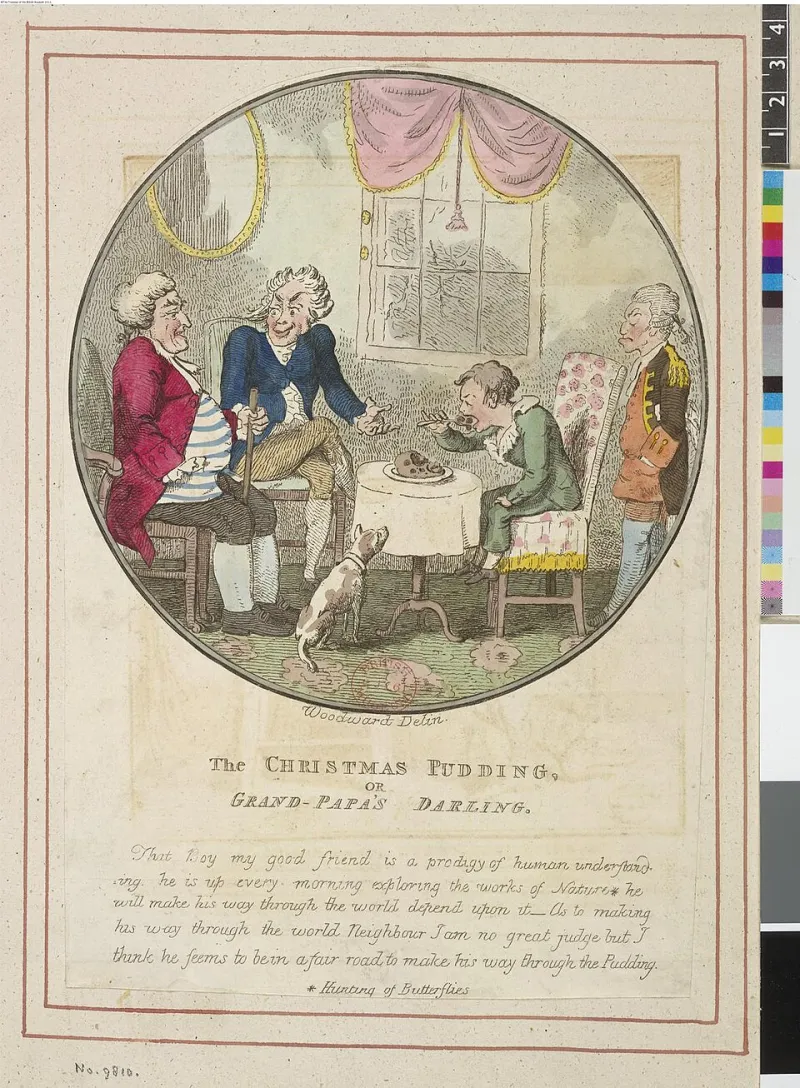
Photo: Print made by: Isaac Cruikshank (?) After: George Moutard Woodward Published by: S W Fores, Public domain, via Wikimedia Commons
Stir-Up Sunday has a reputation problem. It arrives with a recipe that seems to assume a Victorian household: pounds of dried fruit, a basin the size of a hat, a pudding that feeds twelve and then sits in the cupboard reminding you of your own ambition. For a one- or two-person household, that is not tradition. That is a catering job.
But the ritual itself is worth keeping. Stir-Up Sunday falls on 22 November 2026, and the point was never the volume. It was the stirring, the smelling, the small ceremony of making something that improves by waiting. A two-person Christmas pudding can do all of that in a 500ml basin. It can be honey-sweetened, made in an afternoon, steamed without drama and stored until Christmas without taking over a shelf.
This is not a compromise pudding. It is simply the right size.
Why a small pudding makes sense
A Christmas pudding is dense, rich and best in small slices. Most households do not need a kilo of it. A scaled-down pudding gives you two generous servings on the day, or four modest ones if you are feeding people who like a spoonful rather than a slab. It also fits in a small steamer, a compact kitchen and a normal-sized fridge.
The smaller basin has another advantage: it matures faster. A large pudding needs weeks to mellow. A small one, made on Stir-Up Sunday, has a full month to settle before Christmas. That is plenty. If you miss 22 November, you can still make this in the first week of December and it will be good, just a little less rounded.
The honey question
Honey in a Christmas pudding is not a novelty. It brings moisture, a darker flavour and a gentle sweetness that sits well with dried fruit and spice. But it is not a straight swap for sugar. Honey is wetter and more assertive, so this recipe uses a mix of dark brown sugar and British honey rather than replacing all the sugar outright.
A robust honey works best here: ivy, heather or a dark wildflower honey. Something with a bit of backbone. If your jar is set, warm it gently in a bowl of hot water before measuring. Do not use a delicate spring honey; it will disappear behind the fruit and the spice, and you will have spent good money on a flavour nobody can find.
A two-person honeyed Christmas pudding
This makes one 500ml pudding, serving two generously or four modestly. You will need a 500ml pudding basin, greaseproof paper, foil and string.
Ingredients
- 100g mixed dried fruit (raisins, sultanas, currants)
- 30g candied peel, chopped
- 50g fresh white breadcrumbs
- 40g plain flour
- 40g vegetarian suet
- 35g dark brown sugar
- 40g dark British honey
- 1 small egg
- Finely grated zest of half an orange and half a lemon
- Half a teaspoon mixed spice
- A pinch of salt
- 1 tablespoon brandy, rum or apple juice
Method
Butter the basin generously. Put a small disc of baking paper in the bottom if you like, though it is not essential.
In a large bowl, mix the dried fruit, candied peel, breadcrumbs, flour, suet, sugar, spice and salt. In a small jug, whisk the egg with the honey and brandy or juice until the honey loosens. Pour the wet into the dry and stir until everything is evenly combined. It should be sticky but not sloppy. If it feels stiff, add a teaspoon of milk; if it feels loose, add a tablespoon of breadcrumbs.
Spoon into the basin and level the top. Cover with a pleated circle of greaseproof paper, then a pleated layer of foil. Tie securely with string around the rim. If you want a handle for lifting, tie another length of string across the top before knotting.
Steaming notes that actually help
Put an upturned saucer or a small trivet in the bottom of a large pan. Sit the basin on it. Pour boiling water into the pan until it comes about halfway up the side of the basin. Cover the pan with a lid and bring to a gentle simmer. Steam for 4 hours, checking every 45 minutes or so and topping up with boiling water as needed. Do not let the pan boil dry. Do not let the water bubble so hard that it splashes over the foil.
When the pudding is done, lift it out carefully. Leave it to cool completely in the basin, then remove the foil and paper, wrap the pudding in fresh greaseproof paper and foil, and store it in a cool, dark cupboard. It will keep for several weeks.
On Christmas Day, or the day before, re-steam it for 1 hour in the same way. If you are short on time, you can microwave small slices, but the steamed version is better. A small pudding re-steams quickly, which is one of its quiet advantages.
A calm make-ahead timeline
- Before 22 November: buy the dried fruit, check you have a 500ml basin and enough foil and string. If you keep honey in the pantry, choose a dark jar.
- 22 November 2026: stir the pudding, steam it for 4 hours, cool and store.
- Late November to mid-December: leave it alone. That is the work.
- Christmas week: re-steam for 1 hour and serve warm.
If you are reading this after Stir-Up Sunday, make it by the first week of December. The pudding will still be good. The ritual is not a deadline; it is a useful excuse.
Serving two without apology
Warm the pudding, turn it out onto a small plate and bring it to the table with custard, cream or a little extra honey warmed with a splash of orange juice. A small pudding does not need a performance. It needs a spoon.
The case for festive cooking that does not assume a crowd is simple: the ceremony scales. You can stir a small pudding on a quiet Sunday, wrap it in foil and forget about it for a month. On Christmas Day, there will be enough for two, and perhaps a little left for Boxing Day. That is not a lesser tradition. It is a sensible one.
If you have a jar of British honey in the cupboard, use it. If you have a small basin and an afternoon, use that too. The pudding will not know how many people are coming.