Reading Between the Labels: A Calm Guide to Buying British Honey
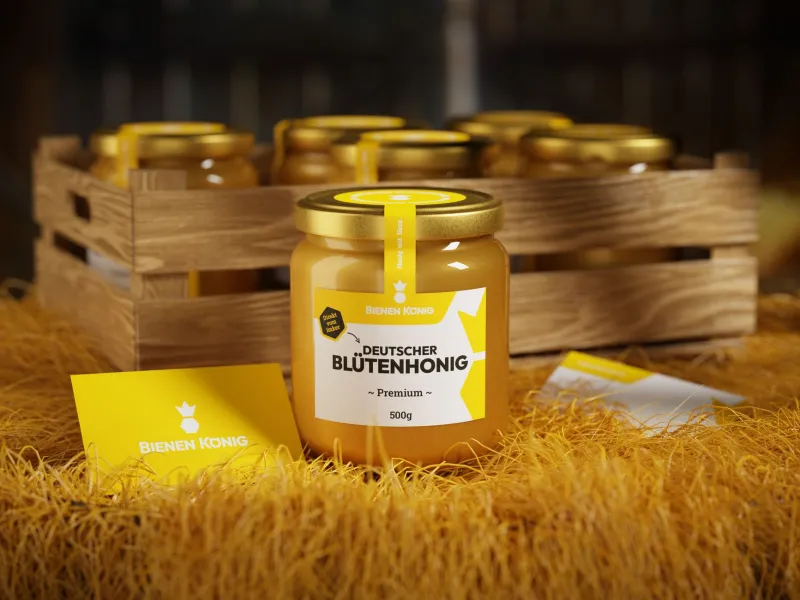
A jar of honey is a small lesson in trust. In November 2026, the shelves are full of labels that promise simplicity — raw, local, single-origin, bee-friendly — but the words do not always mean what a shopper might assume. None of this is a reason to be cynical about honey. It is a reason to read the jar a little more carefully and ask a few good questions.
Raw: a useful word with a loose meaning
In the UK, 'raw' is not a tightly defined legal term for honey in the way 'organic' is for certified organic food. It usually signals that the honey has not been heavily heated or finely filtered, but it can mean different things to different producers. One beekeeper may warm honey gently to strain out wax; another may call that processed. Neither is necessarily dishonest, but the word alone does not tell you much.
If raw matters to you, ask what the producer means by it. Was the honey heated? To what temperature? Was it filtered, and through what? Does it set in the jar? Crystallisation is normal, not a fault. A honey that stays perfectly runny for years may have been treated to do so, but that is not automatically a bad thing either. It depends on what you want from the jar.
Local: a postcode or a mood?
'Local' has no single legal definition on a honey label. It might mean the hives are a few miles away. It might mean the honey was packed in the same county. It might mean the brand is small and regional but blends honey from elsewhere. At a farmers' market, local usually means what it says. Online, it pays to check.
Look for a named beekeeper, an apiary location, a harvest year and a batch number. 'Produced in the UK' is stronger than 'packed in the UK'. 'British honey' should mean honey produced by bees in the UK, but blends and phrasing can get muddy. If the label says 'a blend of non-UK honeys', believe it. If it says nothing at all, ask.
Single-origin: one hive, one field or one region?
Single-origin is another phrase that sounds precise but is often flexible. It could mean one apiary, one region, one harvest, or one dominant floral source. In a country with mixed hedgerows and changing weather, true single-varietal honey is harder to produce than the label might suggest. Some UK honeys — heather, lime, rapeseed — can be more distinctive, but many jars are a blend of whatever the bees found.
Ask what the producer means. A single-origin jar from one small apiary can be a lovely thing, with real variation from year to year. A single-origin claim on a larger brand may simply mean a regional blend. Both can be good honey. They are just different stories.
Certifications and claims worth noticing
Organic honey should carry a recognised organic certification symbol, and the producer should be able to explain what that covers. Other assurance marks may relate to food safety or British production, but they are not all the same thing. A logo is a prompt to ask, not a substitute for one.
Be wary of vague green language. 'Bee-friendly' is a nice sentiment, but every honey producer depends on bees. It does not tell you whether the hives are managed well, whether forage is abundant, or whether the honey is genuinely from the area named. 'Sustainable' is similarly slippery. Look for specifics: named hives, local forage, minimal travel, recyclable packaging, refill options, or a beekeeper who talks openly about varroa and colony management.
Questions to ask at a farmers' market
A good stallholder will not mind a few queries. Try these:
- Where are your hives based?
- Is this jar from this year's harvest?
- Is it a blend, and if so, from where?
- What does raw mean to you?
- Has the honey been heated or finely filtered?
- What do the bees forage on around the hives?
- Do you sell in refillable jars or larger containers?
If the answers are vague, that is useful information. If the seller is happy to explain, you are probably in good hands.
Choosing honey for your kitchen
Set honey is brilliant on toast and in baking. Runny honey is easier for drizzling over yoghurt or stirring into dressings. Strong, dark honey can stand up to roast vegetables and cheese; mild, floral honey is better in a delicate cake. If you buy a large jar, decant a small amount and keep the rest somewhere cool and dark. Honey rarely spoils, but it can pick up smells.
Remember that raw honey is still sugar. It is not a health food in unlimited quantities, and it should not be given to babies under 12 months. Those are practical points, not reasons to avoid it.
A quietly sceptical shopping note
The best honey purchase is usually the one where you understand what you are buying. That might be a jar from a beekeeper down the road, or a supermarket bottle that suits your budget. Local honey supports UK beekeeping, but it is not automatically better in every way. A clear label, a named producer and a sensible answer to a simple question are worth more than a handful of fashionable words.