The Set Jar Club: Why Grainy British Honey Is Worth Keeping
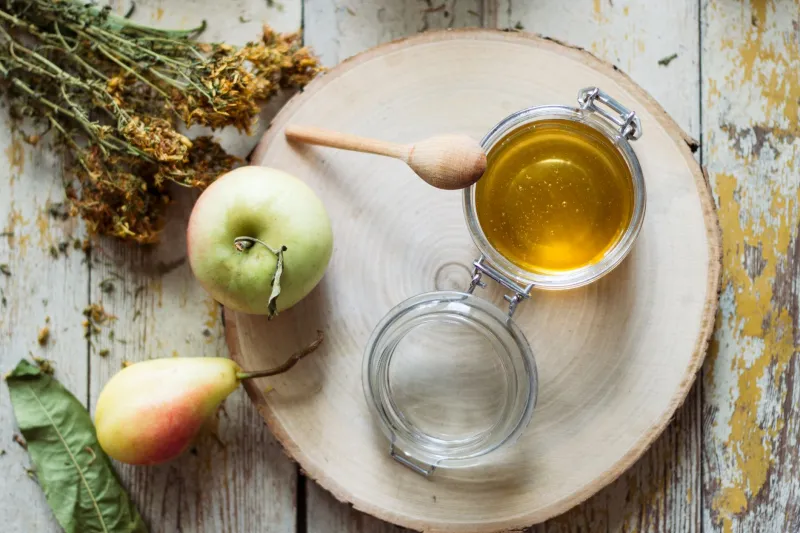
There is a particular look that crosses people’s faces when they unscrew a jar of honey and find it opaque, sandy and stubbornly solid. It is the look of a small domestic failure. A thing that was once glossy has become grainy, and surely that means it has gone off, or been badly made, or at least lost its point.
It hasn’t. Crystallised honey is honey behaving exactly as honey tends to behave. And by November, when the kitchen window is more often misted than open, I would argue that the set jar is the more useful one to have within reach.
A natural habit, not a fault
Honey is a saturated sugar solution, which is a fancy way of saying it is holding more sugar than water can comfortably keep dissolved. The two main sugars in play are glucose and fructose. Glucose is the keener one: it comes out of solution first and forms those small grains. Fructose hangs on longer. The ratio between them, along with storage temperature and the pollen and nectar the bees worked from, decides how quickly a jar sets.
This is why British honey is such a mixed bunch. A jar from an oilseed rape crop can turn firm within weeks. Ivy honey is famous for setting like cold butter. Heather honey can be thixotropic — a lovely word meaning it gels until you stir it, then loosens. Warmth slows the process; a cool cupboard speeds it up. None of this is a mark of quality, age or adulteration. It is simply the character of the jar in front of you.
What crystallisation is not is a sign that the honey has spoiled. Honey is naturally acidic and low in available water, which makes it a difficult place for microbes to get going. A grainy jar is safe to eat. The grain is sugar, not grit, and it will soften on the tongue.
Warming it without ruining it
Sometimes you do want runny honey: for drizzling over yoghurt, perhaps, or for a dressing where you want it to blend quickly. The answer is gentle warmth, not force.
Stand the jar — lid off — in a bowl of warm water. Aim for hand-hot rather than steaming, somewhere around 40°C. Leave it for fifteen to twenty minutes, stir, and repeat if needed. A clean spoon and a little patience will do more than a blast of heat. Avoid boiling water, direct contact with a hot pan, or leaving the jar on a radiator. High heat can dull the delicate floral notes that make British honey worth buying in the first place.
If you use a microwave, keep it brief and low, stirring between short bursts. The aim is to loosen the honey, not cook it. And accept that the jar may set again in a few weeks. That is not a defeat. It is just the nature of the stuff.
Where set honey earns its keep
This is the part I wish more people knew. Solid honey is not a compromised version of runny honey. In plenty of kitchen jobs it is the better tool.
Take toast. A spoonful of set honey spreads like soft butter and stays where it is put, instead of making a break for the crust. The same goes for crumpets, scones and a plain digestive biscuit on a grey afternoon. For a winter cheese board, a firm honey is easier to portion and less likely to pool around the cheddar.
In baking, set honey is straightforward: weigh it as you would runny honey and let the warmth of the batter or the creaming butter soften it. It blends into flapjacks, honey cakes and porridge without drama. You can also beat set honey with a spoon until it turns pale and creamy — whipped honey — then keep it in a small jar for spreading. A pinch of cinnamon is nice, but not essential.
Dressings are where I think crystallised honey quietly shines. A honey-mustard dressing for winter kale is a good place to start: two tablespoons of set honey, one tablespoon of Dijon mustard, two tablespoons of cider vinegar, four tablespoons of rapeseed oil, salt and pepper. Warm the honey just enough to loosen it, whisk everything together, and massage it into shredded kale with a pinch of salt. The honey clings rather than slides, which is exactly what you want.
Roast parsnips, carrots and squash take kindly to the same idea. Toss them with set honey, mustard, a little oil and salt before they go into the oven. The honey melts into a glaze and the edges catch. It is a very good November supper alongside something green from the garden or the greengrocer.
Keep it simple, keep it useful
Store honey at room temperature, in a dry cupboard, with the lid on. There is no need to refrigerate it; cold only encourages the very thing you are trying to avoid. Use a clean, dry spoon. If a jar does crystallise, you have not failed. You have simply been given a different texture to cook with.
The one thing worth watching for is a genuine fault: a sour, alcoholic smell, fizzing, or visible mould. That is not crystallisation and the jar should go. But the thick, grainy, pale jar at the back of the cupboard is almost certainly fine.
So stop treating set honey as a problem to fix. Warm it when you need to, spread it when you don’t, and cook with it often. The set jar is not the sad jar. It is the useful one — and in a British winter kitchen, that counts for a great deal.